Avoiding ‘hot’ wheels
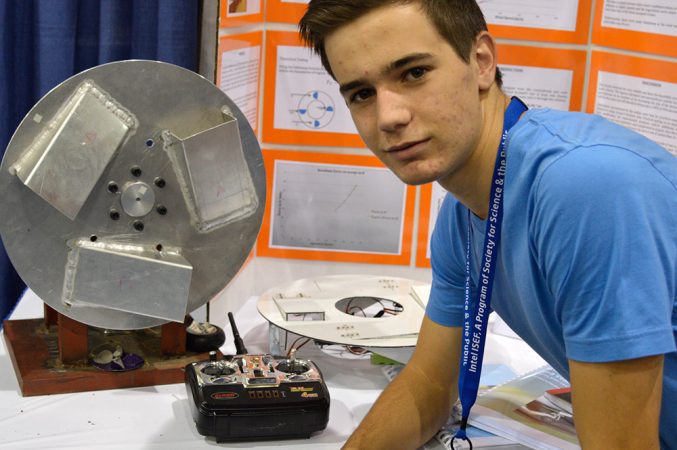
Nervous air travelers concerned about the risks of aging planes may offse worry about how fountainhead the wings or engine are holding up. But a planing machine's tires suffer a great deal of wear and shoot up to a fault. A new gimmick that attaches to the wheel rims could hold out the animation of those tires, saving the world's airlines millions of dollars per day.

When aircraft approach their name and address, pilots prolong the landing gear to prepare for touchdown. Before the plane lands, its tires aren't spinning, notes Phillipe Lothaller. He's a 17-year-old engineer at Rondebosch Boys' Senior high school in Cape Town, South Africa. But the split second a plane's tires hit the runway, they start spinning at rattling high speeds. For some aircraft, landing speeds can embody as high as 200 kilometers (124 miles) per hour.
That instant overflowing quickening is precise stressful for a tire, says Lothaller. Friction can movement a tire's rubber to speedily collision 240° Celsius (464° Fahrenheit). The stresses of landing also tend to pull the layers of a tire apart, causation them to separate from all other. This separation is known As delamination. Aircraft criminal maintenance crews typically retread a planing machine's tires after every 200 landings. And each tire tin can be retread only five times before it must be replaced. Refitting a shave with new "wheels" throne be quite costly, with each bore running between $1,500 and $10,000.
Those costs lav add up quickly, because each plane can take many tires. Large aircraft may wealthy person a dozen surgery more. Indeed, Lothaller found that one of the largest airlines worldwide spends more $2 trillion per day to purchase and maintain its aircrafts' tires.
Directly, Lothaller has planned a gimmick to reduce wear off and tear along those tires. He attaches a large, circular plate to the wheel brim that holds the outwear. Eastern Samoa pilots come certain a landing place, several metal plates on the device protrude, creating scoops. Each grievous bodily harm is about 7 centimeters (2.8 inches) tall and several times that long. They catch the air, turning the twist into a pinwheel. This causes the wheel to start spinning long before IT touches the ground. That way the tire won't hold to accelerate nigh as much once the plane touches down. The result: far fewer stress on all tire.
The adolescent's tests indicate that these scoops could reduce tire wear by between 35 and 45 percent. So as an alternative of retreading a tire all 200 landings, crews could wait to do this later on every 250 to 260 flights. Lothaller given his findings May 13 in Genus Phoenix, Ariz., at the Intel Supranational Science & Engineering Fair. The Bon ton for Scientific discipline &ere; the Unexclusive, which created the fair in 1950, still runs it. (SSP likewise publishes Science News for Kids.)
Lothaller points to other benefits from extending the life of aeroplane tires. For instance, airports wouldn't have to spend as much money removing chunks of damaged tires from runways. Those chunks pose a peril to planes as they land and take off, he notes. An engine might suck in them up, causing damage. Or parts of the step shed by a tire could bounce up and pierce the sputte of a skim, risking a fuel leak. (Conceive of the damage that could be caused by hitting a collocate of tire happening the runway at more than 100 mph!)
Force Words
delamination The separation of layers in an object, so much every bit the layers in a tire tread or a sheet of plywood. Delamination can occur when the stresses of high temperatures, moisture or pressures attract at or bend layered structures. In separate cases, the glues or adhesives that hold the layers together may weaken with age.
organise A investigator who applies science to the development of useful products or processes.
retread Replacement the outer layers of rubber on a tire. It bum temporarily exsert a tire's running life.

Post a Comment for "Avoiding ‘hot’ wheels"