Around the world, buyers are turning away from luxury properties. Here’s why
Viewed from Bangalore, the buy of a newly built three-bedroom apartment in London for more than £ane.4m (Due south$two.4m) seemed like a safe investment bet.
The elevation-floor three-bedchamber domicile nether construction in Keybridge House south of the Thames boasted views of the City of London and the Shard skyscraper. Equally Shonu Bhandari considered the purchase 2 years ago, agents told him he could expect the value to rise 15 per cent earlier the belongings had even been finished. The Indian entrepreneur, who runs a medical products company, happily signed upward to buy.
Merely his purchase soured quickly. When Bhandari approached a mortgage lender, it valued the holding not at fifteen per cent more than he had agreed to pay – simply at 20 per cent less. With completion of the building looming, he signed over the property to a new buyer in March this twelvemonth for £1.2m, losing more than than £200,000 of his deposit.
"Information technology was not as good as it looked on paper," he said. "I would purchase again in London just would I buy off-plan? Not any more."
READ> Real estate investors: Is at present the right time to buy property in London?
Bhandari'southward feel has been repeated around the world. The belongings he was ready to buy forms part of a global wave of development of luxury urban apartments, fuelled past developers' expectation they could sell thousands of homes equally investments to the international wealthy.
At the height of the smash in 2022 and 2015, buyers from Shanghai to Kuala Lumpur and Mumbai bought unbuilt homes overseas from brochures, in buildings that promised 24-hour concierges, gyms, pools – and almost immediate financial returns. 1 new-build brochure from the manor agent Savills in 2022 said price growth in prime cardinal London was expected to average 21.v per cent by the end of 2020. Prices have so far fallen 10.four per cent since that date, according to LonRes, a data provider.
The homes were built in role to cater for a boom in Asian wealth, often coupled with a desire to store that wealth in a stable location away.

"Global capital entering local real estate markets is non particularly new, but what was new was the intensity with which it entered places like Vancouver, New York, London, Melbourne and Sydney," said Andy Yan, a planner and bookish in Vancouver.
Developers targeted both mortgaged investors such as Bhandari and those wealthy plenty to pay in cash. The influx of investor money helped to decouple already stretched urban house prices from local incomes.
But despite the expansion of global wealth, the surge in demand for luxury apartments did not last. Developers' over-exuberance and government crackdowns combined to stop the selling frenzy and leave developers, lenders and property investors battling to absorb the fallout.
"I can't remember the last time I sold a new-build property at a profit," said Charles Jordan, an agent at MyLondonHome who resold Bhandari's flat. Hashemite kingdom of jordan recently helped resell another home in a waterfront tower that was bought for £2.8m and sold for £2.05m ahead of completion – so an overseas buyer who had hoped to "flip" for a turn a profit instead lost £750,000.
"Global capital inbound local real estate markets is not peculiarly new, but what was new was the intensity with which it entered places similar Vancouver, New York, London, Melbourne and Sydney." – Andy Yan
Arriving at Vancouver's international drome, visitors must walk past advertisements for gleaming new-build condominiums, with text in both English and Chinese.
The sales button is testament to a boom that has transformed Vancouver, thank you to an influx of overseas capital into property. About C$75bn (S$77.9bn) of property is endemic past overseas residents; in parts of the city one in four new-build apartments is owned by a not-resident, according to Yan, who directs the urban center programme at Simon Fraser Academy. Firm prices in greater Vancouver rose virtually 80 per cent in the five years to May 2018.
A report this year deputed by the regional authorities, which took power in 2022 pledging to combat the housing affordability crisis, described how "a fever adult, akin to a gilt blitz, in which foreign buyers rushed to buy homes, willing to pay over market price for property in lodge to be in on the rush and avoid what many thought was inevitable – government intervention. Local speculators and prospective buyers, worried about being priced out of the marketplace, further fuelled demand."
Governments did indeed arbitrate: The Chinese government introduced curbs on capital flows overseas, and the regional administration in British Columbia chose to attack through taxation. In 2016, it introduced an additional taxation on overseas buyers amounting to fifteen per cent of the value of the property, which was increased to 20 per cent last year. This helped transport the market into reverse. New-build homes are exempt from this charge only have been targeted with other measures including a registry of home "flippers" aiming to combat taxation evasion. Firm sales in Vancouver this year have dropped to their lowest levels in decades.
READ> Lessons in luxury: How businesses volition survive in a world of rapid disruption
Nether intense political pressure over housing, governments around the earth have acted similarly. The UK government overhauled stamp duty in 2014, sharply increasing the revenue enhancement for homes costing more than £1.125m; two years later it added a surcharge for 2nd habitation and investor-buyers. Commonwealth of australia'south New South Wales doubled its stamp duty surcharge for overseas buyers to eight per cent in 2017. New Zealand last yr banned most belongings purchases by non-resident overseas buyers.
The US also took measures: Donald Trump's revenue enhancement plan this year capped deductions of country and local taxes – including belongings tax – that households could make from their federal tax pecker at Us$x,000 (S$13,556). Mortgage interest taxation deductions likewise faced a new limit. This added to the costs of owning expensive properties in high-taxation states such as New York.

Measures to combat money laundering besides sent a arctic through some wealthy would-be buyers. Canada and the U.k. are bringing in registers of those with "significant control" of companies, including those used to ain holding. Measures such as this take worried "people who are concerned near reputational hazard – who are afraid that noise might surround their family, their avails", said i senior London banker.
Such moves sent property markets reeling. Steven Herd, founder of MyLondonHome, said some clients he helped to resell homes were far from super-rich and ended upwards losing their family savings. "Sometimes the eolith coin came from a whole family clubbing together to invest, because it's what everyone was doing."
"I can't remember the last time I sold a new-build property at a profit." – Charles Jordan
Many buildings planned when the golden blitz was at its superlative are only at present existence completed. Some, such every bit New York'southward 472m-high Central Park Tower currently under structure, have launched sales programme in the by year. Yet on Billionaire's Row, the new crop of residential skyscrapers shut to Primal Park that volition include the new tower, about 40 per cent of apartments are unsold, according to Jonathan Miller, a property consultant and analyst. Inner London has virtually ane,500 completed new homes that have not been sold, according to Molior, a inquiry firm.
Lenders are issuing inventory loans to developers who have been unable to repay construction loans by selling the homes they have built. But they accept petty more chance of paying back these new loans, said Andrew Gerringer, a New York residential property consultant. This may leave funders, who include banks, individual equity groups, property debt funds and hedge funds, forced to take over properties and deal with the sales slump themselves.
"Many of the very large condos that may not sell will as well not rent at numbers that will cover the mortgages, common charges and real estate taxes," he said. "What we don't understand . . . is how these developers go alee and build without agreement the depth of the residential buyers for their properties."
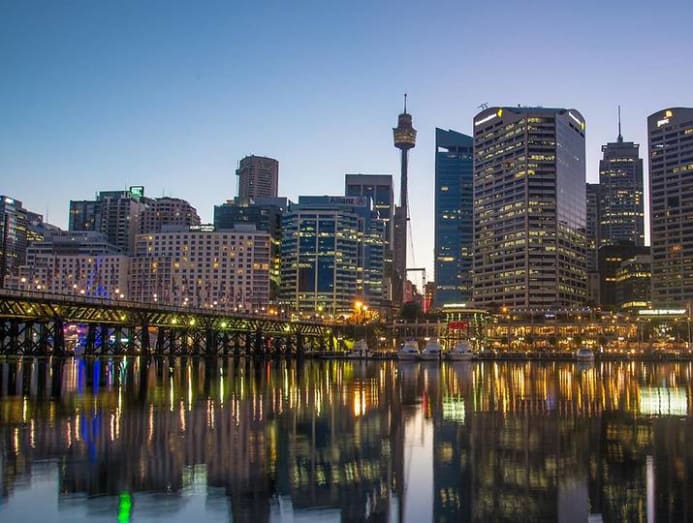
The effect of the high-end building blast has marked these cities permanently. The southern end of Central Park, the banks of the Thames and Sydney'due south waterfront are lined with new towers. Vancouver has besides seen a burst of condominium construction, while thousands of individual family homes take been torn downwards and replaced with big "McMansions".
Peter Rees, professor of city planning at the Bartlett faculty of the congenital surroundings at Academy College London, has warned that the Thames could be "lined with derelict towers" in a century'south fourth dimension, equally service charges prove inadequate for replacing glass facades and elevators, which have a limited life.
"Many of the very large condos that may non sell will besides not hire at numbers that will cover the mortgages, common charges and existent estate taxes. What we don't understand . . . is how these developers get ahead and build without agreement the depth of the residential buyers for their properties." – Andrew Gerringer
In London, inquiry by Savills shows construction continues to be out of step with demand. The London market place over the next v years volition need 42,500 new homes a year for sale or rent at cheaper than market rates, the property bureau found – only just about 3,500 a year volition be built. Demand also far exceeds supply in the "lower" and "mid" markets, up to £700 per foursquare pes. Merely above that, planned supply starts to exceed demand. In the £700 to £1,000 a sq. ft. category, annual demand for 7,000 homes a year will be catered for by almost 10,500.
Prices at the peak end are falling, just the median London house price remains more than 12 times average earnings. "What we don't demand in London are more than £1m-plus apartments with swimming pools, spas, cinema suites and service charges of £seven or £8 a sq. ft. [per yr]. Those are not for normal Londoners," said Herd.
Governments have succeeded in damping high-end markets that had become stores of overseas wealth. But they now confront a more circuitous claiming: Pushing forward construction of affordable homes for the average and lower-paid workers who keep their cities running.
"The state of affairs in Vancouver took nigh 20 years to reach this climax and it will probably take several years if not decades to fix," said Yan. "Homelessness is still at an best loftier, and housing precarity seems to be the rule and not the exception for many in the service and blue-collar sectors.
"Housing policies need to exist adapted to reflect the 21st-century realities of global finance, mortgages and the hyper-commodification of housing which has changed so much in the by 30 years."
As for Bhandari, he still holds a bet on new-build belongings. His enthusiasm was such that during the nail he also agreed to purchase a one-bedchamber apartment in a belfry nether structure shut to his other, failed, purchase. That building has not yet been completed and he has not decided whether to attempt to cut his losses for a second time. "At the moment, I'm just watching and waiting," he said.
By Judith Evans © 2022 The Financial Times Ltd
READ> You don't have to be a billionaire to stay on Malibu's Billionaire Beach
Source: https://cnalifestyle.channelnewsasia.com/obsessions/why-buyers-are-turning-away-from-luxury-properties-239966

Post a Comment for "Around the world, buyers are turning away from luxury properties. Here’s why"